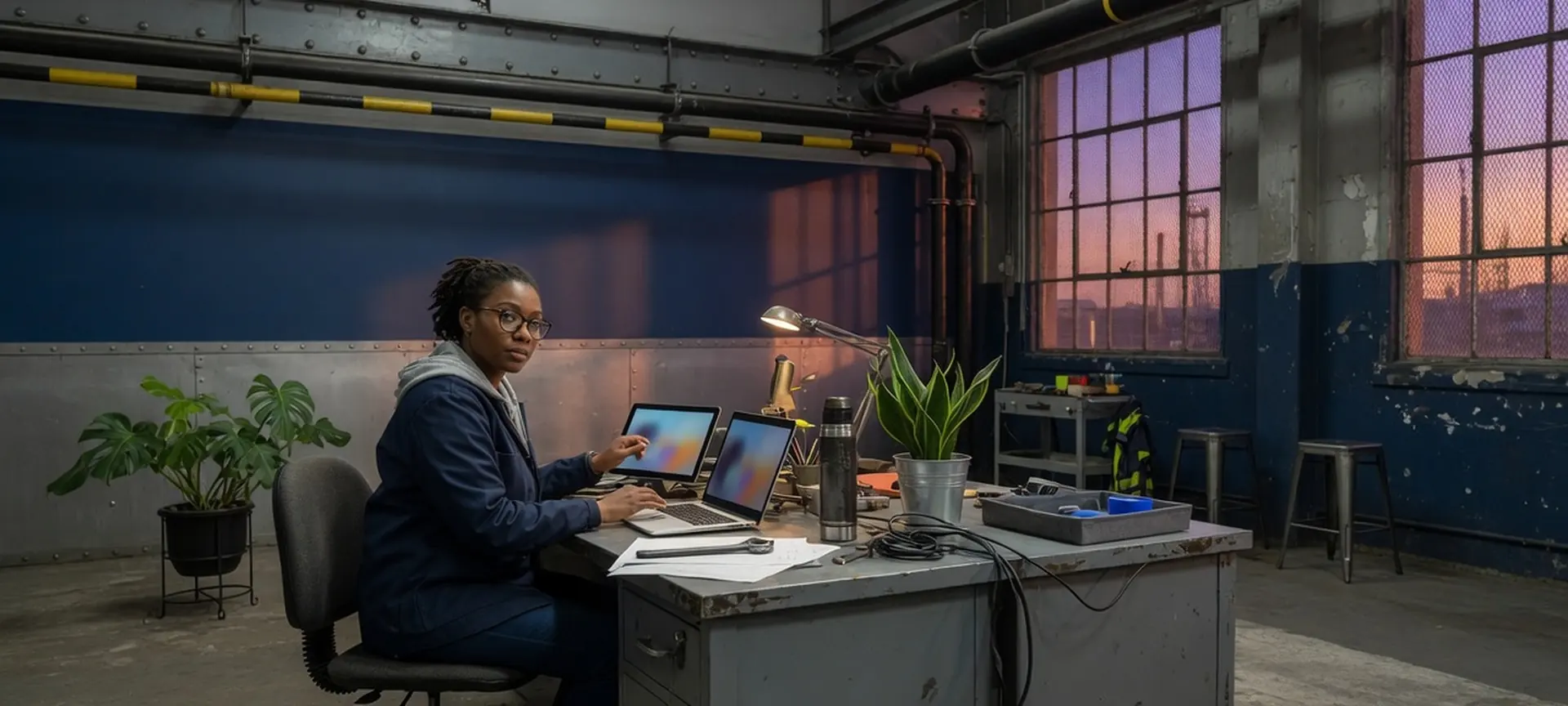
Light manufacturing and industrial
Manufacturers: numbers leadership can trust, and rules that replace an unenforceable ban.
Most plants have an MSP and a monthly report assembled from three exports. We take the CIO role: spend, vendors, and the numbers across ERP, warehouse, and finance. Shop-floor AI gets rules by role, not a ban no one follows.
Typical setup for this industry. Not a client count.
The setup
What we usually find in light manufacturing and industrial.
Production, inventory, and finance each run their own system. Leadership sees the merged picture once a month, assembled by hand from spreadsheet exports. When the numbers disagree, the argument is about the spreadsheet, not the plant.
The data that would answer the question is already there: what was scheduled, what was built, what it consumed, what it cost. It simply never lands in the same place.
What leadership gets
Three reports worth having first.
- ✓On-time delivery, backlog, and schedule performance by line or work center
- ✓Inventory against consumption, with the differences that matter flagged
- ✓Margin by product family, job, and customer, matched to the ledger
Report names are typical for the industry. Yours come from the systems the applications assessment finds. The base dashboard also shows what your technology costs, so license and vendor spend sits beside the operating numbers.
The method, in your terms
How the work usually runs.
- AI Use Policy replaces the ban with rules by role and by kind of data
- AI security assessment counts the tools staff adopted while the ban was in force
- Applications assessment marks ERP, warehouse, and accounting systems as connectable or not
- Base dashboard set up with production, inventory, and spend in one place
- Microsoft 365 review: licensing, account settings, and Copilot readiness by role
- Monthly watch: maintenance, AI security reporting, and automation chosen from the data
The order is fixed. Where you start is a decision, and the first meeting is where it gets made.
Where this has run
A profile from this industry.
Reporting was three exports reconciled by hand.
Light manufacturer · ~120 staff
The ban was the problem, not the AI. We replaced it with rules staff could follow, left the ERP where it was, and made the hand-built monthly report the dashboard's first job.
Start here
What this industry buys first.
- AI Use Policy · Advisory review
- AI security & governance assessment · Advisory review
- Applications assessment · Assessment
- Base dashboard deployment · Deployment
- AI development · Build · priced per feature
- Microsoft 365 migration · Delivery · project
- Microsoft 365 licensing review · Advisory review
Where we work
Light manufacturing and industrial firms across the Carolinas.
Questions
Questions from light manufacturing and industrial
Our staff use AI on quotes and drawings. What is the risk?
The risk when staff use AI on quotes and drawings is customer drawings, pricing, and process know-how leaving your company, usually with no record of it. The AI Use Policy sets what may be discussed with an assistant and what must stay inside your own systems. It sets different rules for the office and the shop floor.
Do we have to stop the line to do this?
No, you do not have to stop the line. The review only reads your systems, the policy is a document, and the dashboard connects to systems rather than interrupting them. Nothing Third Shift does requires production to pause, and the on-site meetings are with leadership, not the floor.
Can you connect our ERP and warehouse system?
Usually yes, Third Shift can connect your ERP and warehouse systems. Most of them offer a direct connection or can export on a schedule. The applications assessment gives every system one call and tells you the effort before anything is built, so you know the cost of each connection up front.
Start here
The first step is the same in every industry.
Advisory first: a written assessment of your environment, the AI Use Policy, and a recommendation you own whether or not you continue with us.