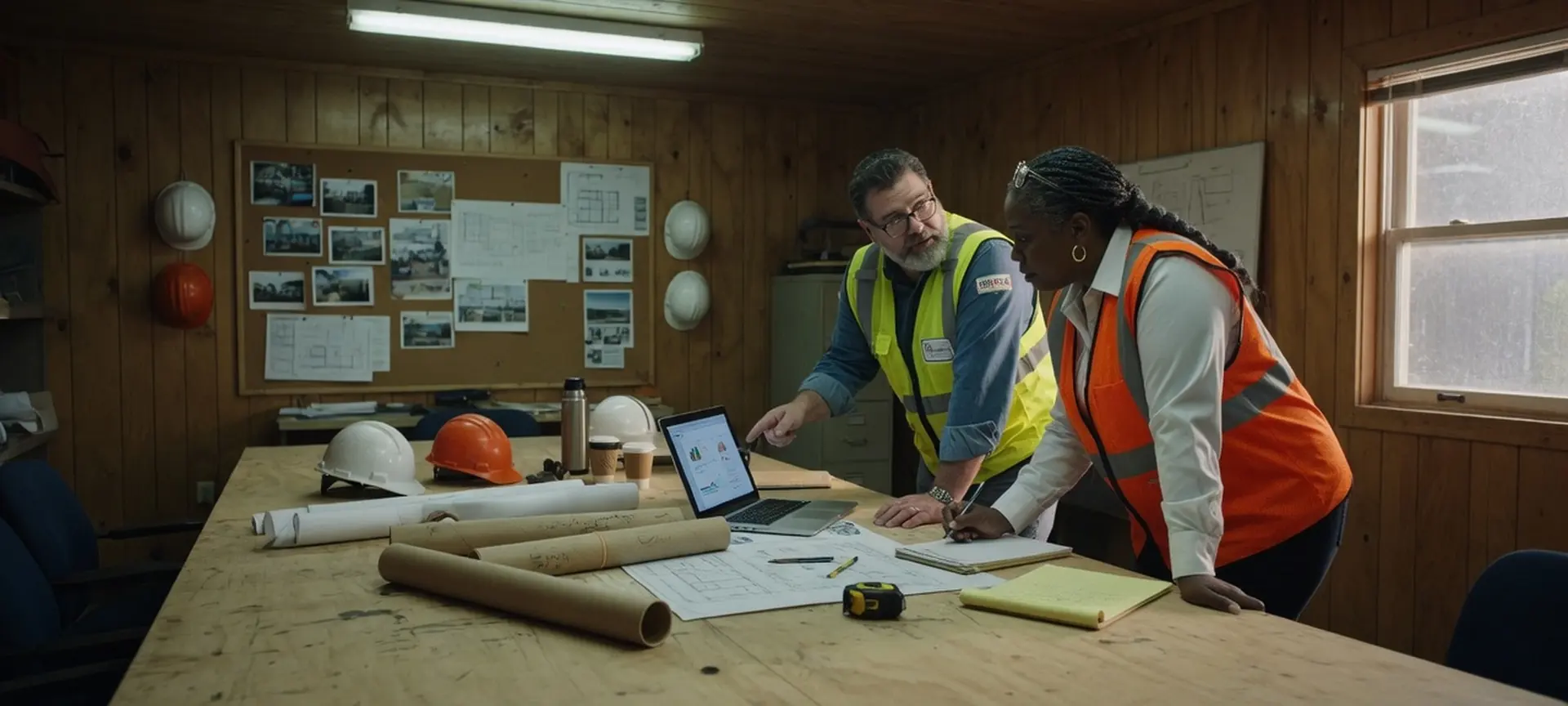
Regional construction firm · ~180 staff
The IT director left mid-project, but the project continued.
Two companies were merging, a new ERP had already been signed for, and the IT director had left. The board was being asked to approve technology spend against a plan no one in the room could explain, and no one had compared the two companies' AI tools.
Representative profile. The Embedded tier adds a weekly meeting to the same work.
The work
What we did, and why
When two companies merge, many of the first decisions are about technology. This firm had already signed for a new ERP, the system that runs operations and accounting. The merger also brought a second Microsoft account and a second set of AI tools. Then the IT director, who had kept much of the plan in his head, resigned. The next board meeting was a vote on spending that no one in the room could explain.
We ran the advisory review across both companies at once. We wrote one AI Use Policy for the combined company, assessed the AI tools in use on each side, and mapped the applications the merged business actually needed. That map changed the ERP scope: two systems no one had planned to move were retired instead, and the migration order was rewritten around the parts of the business that were staying.
We recommended the Embedded tier because the decisions were coming every week. With a weekly place in the leadership and operations meetings, ERP and migration decisions were made in the room with a written assessment attached. Nothing approved one month had to be undone the next. The board received its briefing pack before the approval vote, and the second acquisition went through due diligence on schedule. The interim coverage lasted until a permanent director was hired, and the new director inherited the plan, the license inventory, the renewal calendar, and the list of open decisions.
The result
Where the company stands now
The ERP went live within the agreed window, with the AI policy already in force across both companies. The new director inherited a technology plan, a license inventory, a renewal calendar, and a list of open decisions in place of a stack of vendor email.
For leadership
What changed for the people running it
The board approved technology spend against a written plan it could read and question. The CEO no longer had to relay messages between two IT teams, and hiring a permanent director was no longer an emergency.
This is a representative profile, drawn from the kinds of companies we work with. Figures are illustrative. We publish named results only with a client's written permission.
More profiles
What did the part-time CIO cover after the IT director left?
Coverage ran while the director search continued. One AI Use Policy was written before the two companies' systems were joined, and every ERP and migration decision came with a written assessment.
How were ERP decisions kept in writing during the merger?
Every ERP and migration decision came with a written assessment. The applications assessment for the merged business set out what replaces what, in what order, and what waits a year.
Next step
Your company would start with a written assessment.
Every engagement on this site began by writing down what the company already ran. You keep the assessment whether or not you hire us for the work that follows.