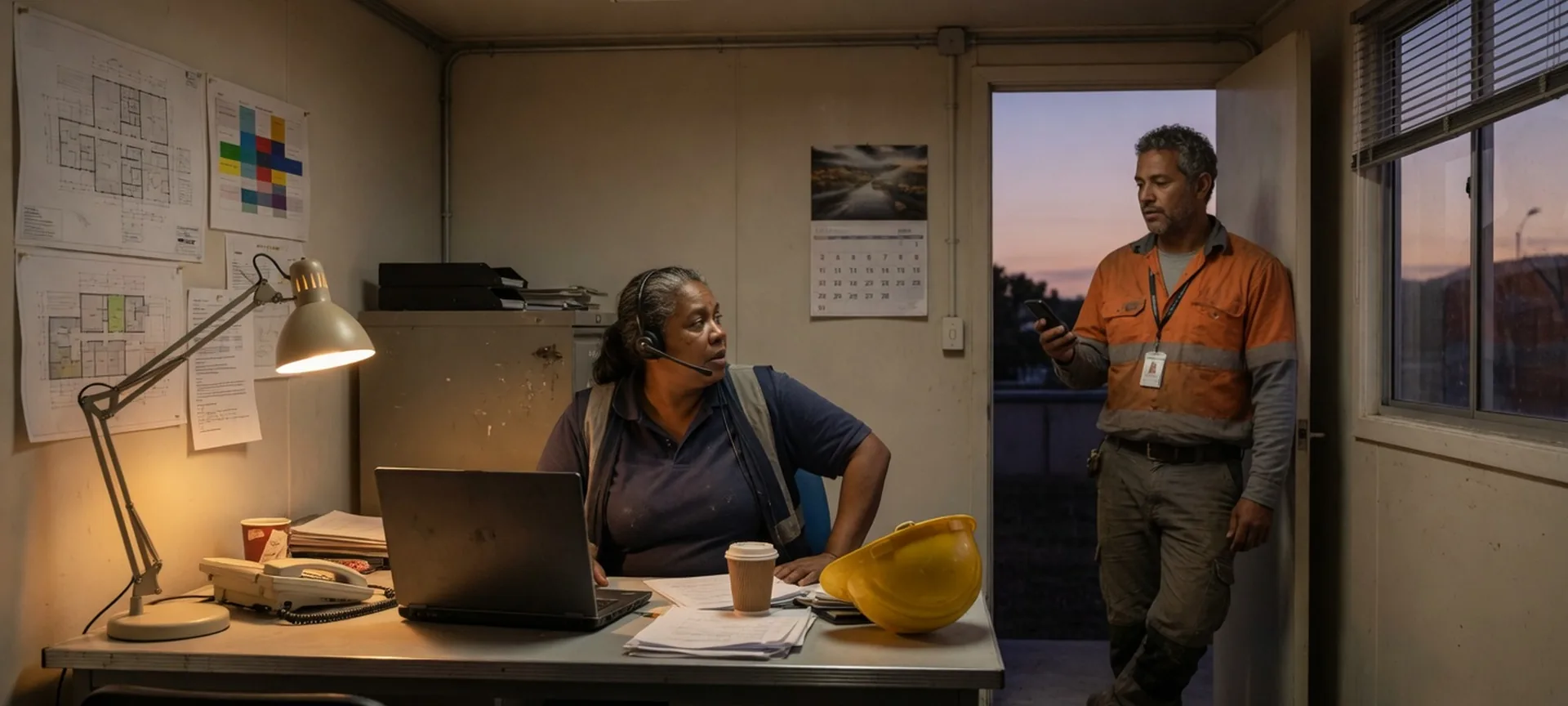
Multi-site materials supplier · Field and office staff
Staff take calls in Teams while the old numbers still ring.
The company already ran Microsoft 365. Calls still lived on a separate cloud phone system, and new people were still being added there. Leadership wanted calls in Teams without a weekend where the published numbers went quiet.
Representative profile. Figures are illustrative.
The work
What we did, and why
The company already ran Microsoft 365. Calls still lived on a separate cloud phone system, and new people were still being added there. Leadership wanted the calls in Teams. They also wanted the published numbers to keep ringing while the move was underway.
A cutover weekend was the wrong plan. The number port cannot be filed until each person can be reached, and a forward is what keeps the old number ringing. So the move runs in production, one group at a time. A person gets a Teams phone and a temporary number first. The old system forwards the published number to that temporary number. The person works in Teams. The old system stays until the forwards are confirmed and the port is filed.
Day-to-day phone support stays with the company's team. This work is the move: the inventory, the temporary numbers, the forwards, and the port paperwork. The old system closes only after the published numbers have moved.
Where they stand
The outcome
The move is in production. People answer in Teams. Published numbers still arrive through the old system, and the port is the step that lets that system close.
For leadership
What changed
A new person can be put on Teams without waiting for the carrier. The list shows who still depends on a forward and who is ready for the port.
This is a representative profile, drawn from the kinds of companies we work with. Figures are illustrative. We publish named results only with a client's written permission.
More profiles
Your turn next
The same method, applied to your systems.
Every engagement on this site started with a written assessment of what the company already ran. Yours starts the same way, and the assessment is yours to keep either way.